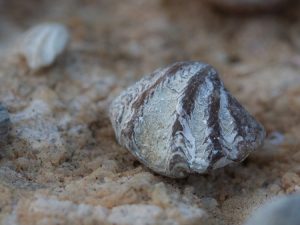
Fossils in Gotland
Gotland is the best place in Europe if you want to explore and experience fossils. More than 400 million years ago there was a tropical sea with very rich vegetation and wild life where Gotland now is. There were corals, cuttlefishes, trilobites and shells. Most of these species are now extinct. When the animals and plants died they became limestone formations.
Gotland was south of the equator
The sea was located somewhat south of the equator. Due to contental drift Gotland was brought to our latitudes. A part of the sea has become the limestone of Gotland. Gotlandic limestone, consisting of a 100 meter thick layer formed during 10 million years, is the best preserved in the world.
As much as 12 different layers can be identified in in the lime bedrock of Gotland. As the layers of Gotland are sloping, every layer can be studied somewhere on the island. In the very north-west is the Visby layer. In the very south, the Sundre layer can be seen. Every layer has its own unique composition of fossils.
Limestone of different hardness
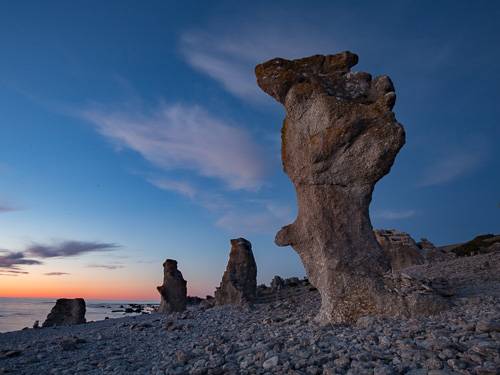
The organisms that built and lived on the coral reefs had shells containing lime. There were both solitary and colony building individuals, such as corals, sea lilies and different types of fungi. When they died they became the hard limestone of Gotland, the reef limestone. This can, for example, be seen as a form of rauks. There are, among other places, rauk fields in Fårö, in Vamlingbo and north of Ljugarn.
The warm sea was filled with organisms, swimming around or crawling at the bottom. There were cuttlefishes, sea lilies, lamp shells, trilobites and shells. When they died, they sank into the sediment of the sea bottom. During millions of years the bottom sediment was pressed together and turned into stratified limestone. The sedimental limestone is not as hard as the limestone from the reefs. The effect of wind, waves and weather decomposes it and the fossils are revealed. The easiest way to find the fossils is searching along the stony beaches of Gotland.
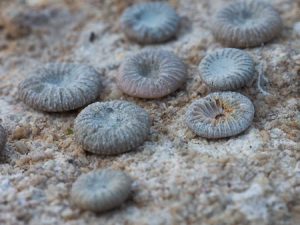
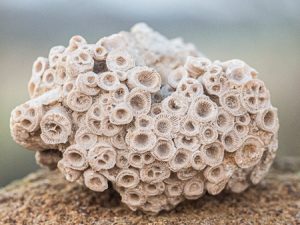
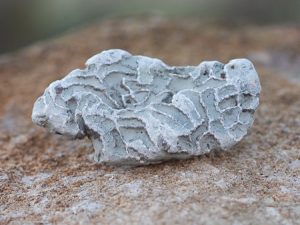
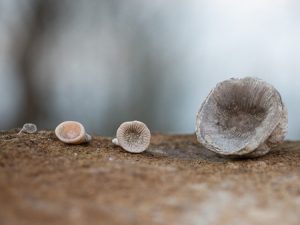
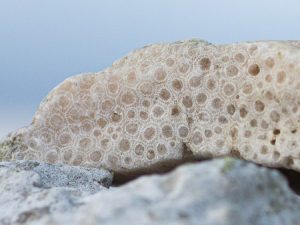
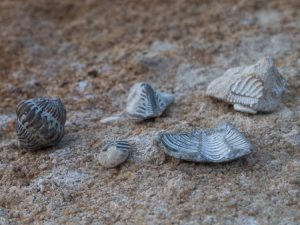
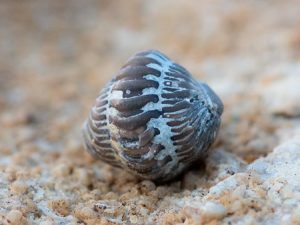
Here you can see some of the fossils you may find in Gotland. Do you want to learn more? Join a guided tour – a fossil safari!
Fossils in Gotland - corals
Fossils in Gotland - trilobites
Fossils in Gotland - molluscs
Fossils in Gotland - lamp shells
Do you want to know more about fossils in Gotland?
- Join a fossil safari. Read more here!
- Read in the book “Gotlands fossil” (Sara Eliasson). Find it in the “net”.
- Visit the museum Fornsalen, in Visby, Gotland.